Project Overview
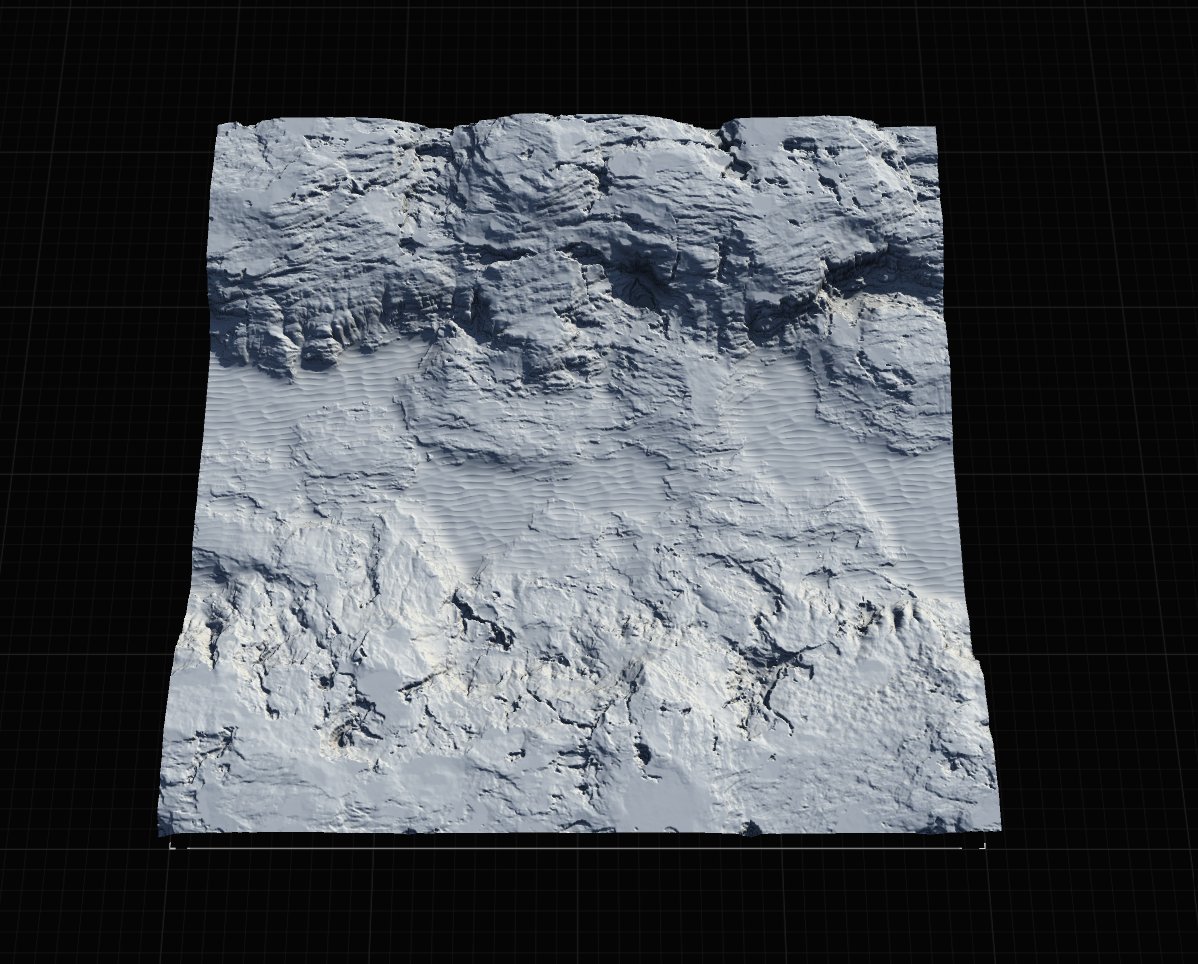
Procedural terrain generation in Gaea
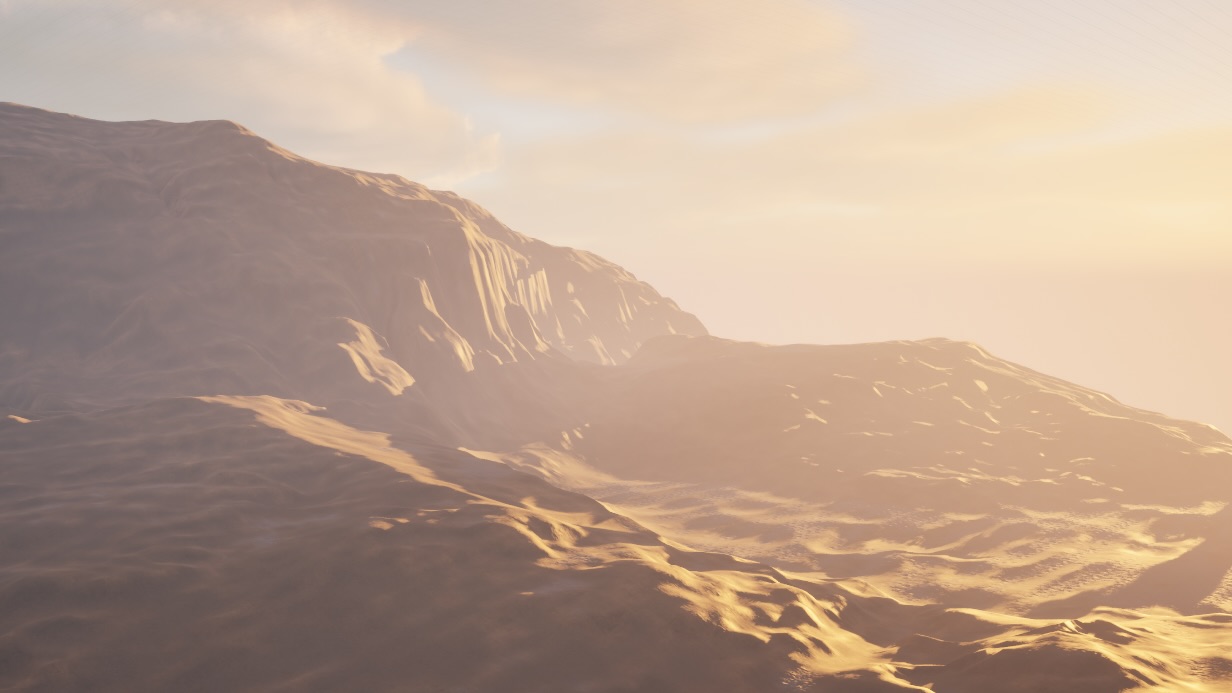
This Gaea workflow creates realistic stratified terrain through a sequential node chain that mimics geological processes. Starting with a Canyon primitive, the terrain undergoes stratification to create horizontal sedimentary layers, followed by erosion nodes that simulate water flow and weathering. Sandar and sediment nodes deposit material in valleys, creating natural transitions between cliff faces and valley floors, while outcrop nodes add exposed rock formations for visual variety.
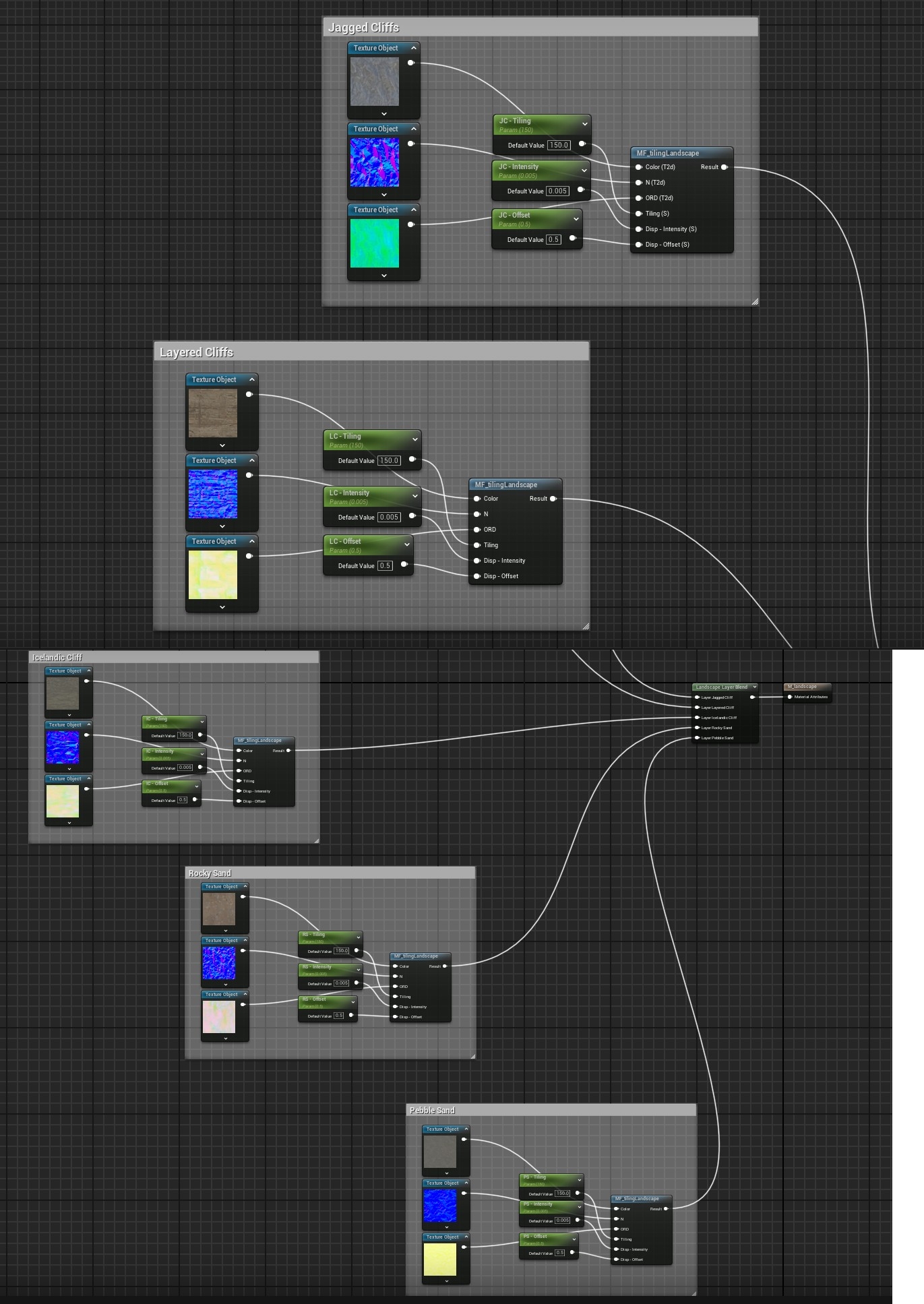
Tri-planar landscape material system
These modular landscape materials use a tri-planar texturing system that combines base albedo, blue noise, and variation textures through custom Tiling, Intensity, and Offset parameters processed by a material function. High tiling values (106–224) ensure detailed close-up quality while blue noise patterns eliminate visible repetition across the massive terrain. The global parameter system allows unified control across all five material variants.
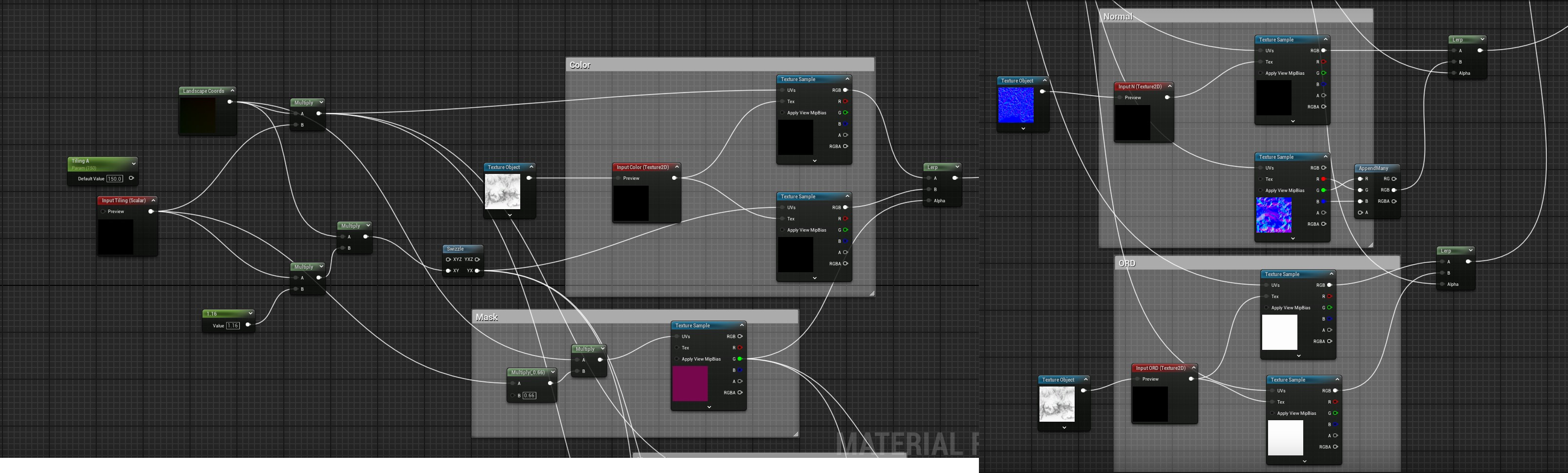
Master material function architecture
This master material function combines Color, Normal, and ORD (Occlusion/Roughness/Displacement) texture channels through a sophisticated blending system that uses landscape coordinates, tiling scalars, and mask textures for controlled layer mixing. The MakeMaterialAttributes node compiles all PBR channels — including a displacement system driven by intensity and offset parameters — into a single material output, enabling efficient multi-layer terrain rendering with vertex displacement for enhanced surface detail.
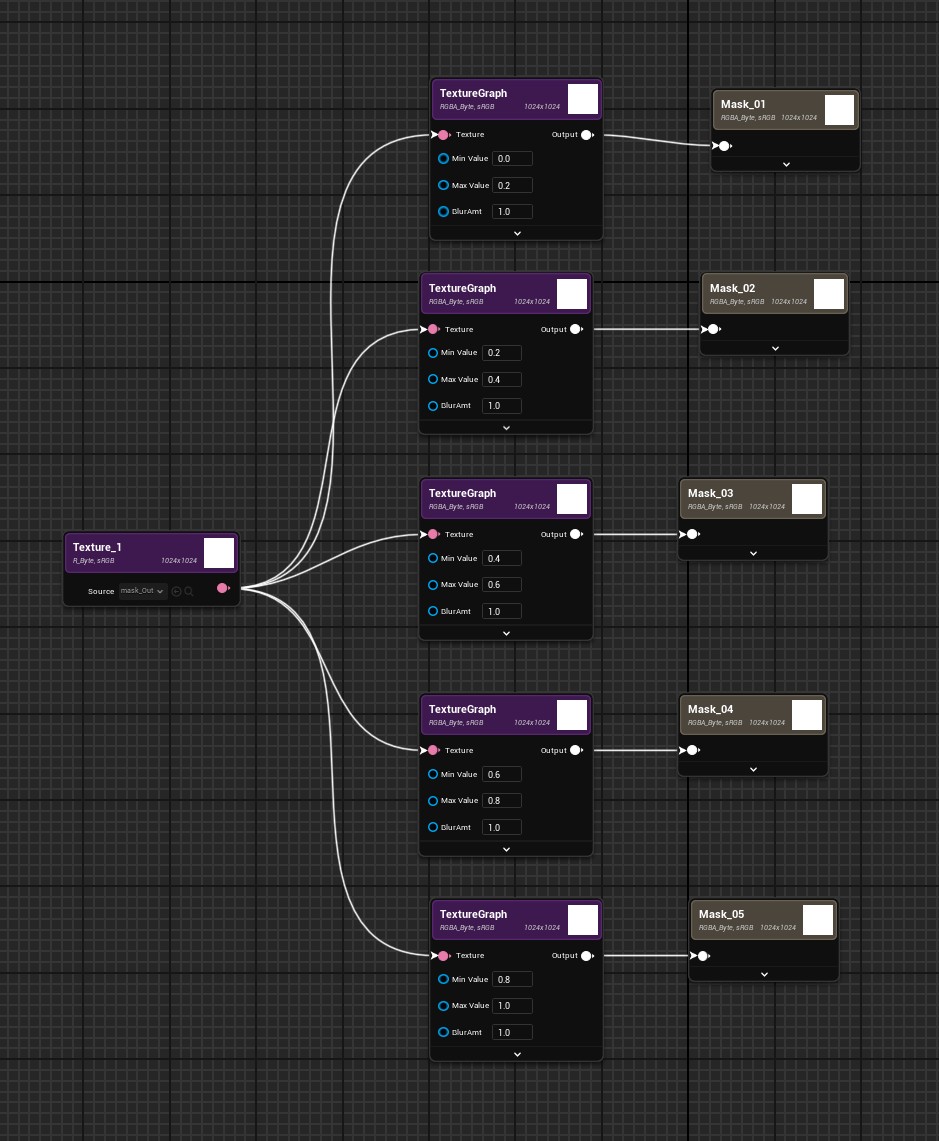
Procedural mask generation
This Substance Designer workflow generates five distinct landscape layer masks using TextureGraph nodes with varying min/max threshold values and blur amounts. Each mask isolates different elevation and slope ranges — enabling precise control over where cliff materials, sand deposits, and rock formations appear across the terrain. This procedural approach ensures masks automatically adapt to any terrain heightmap while maintaining artistic control through adjustable parameters.
Texture channel remapping utility
This utility node graph converts standard ORM (Occlusion/Roughness/Metallic) texture packs into ORD (Occlusion/Roughness/Displacement) format required by the landscape material system.
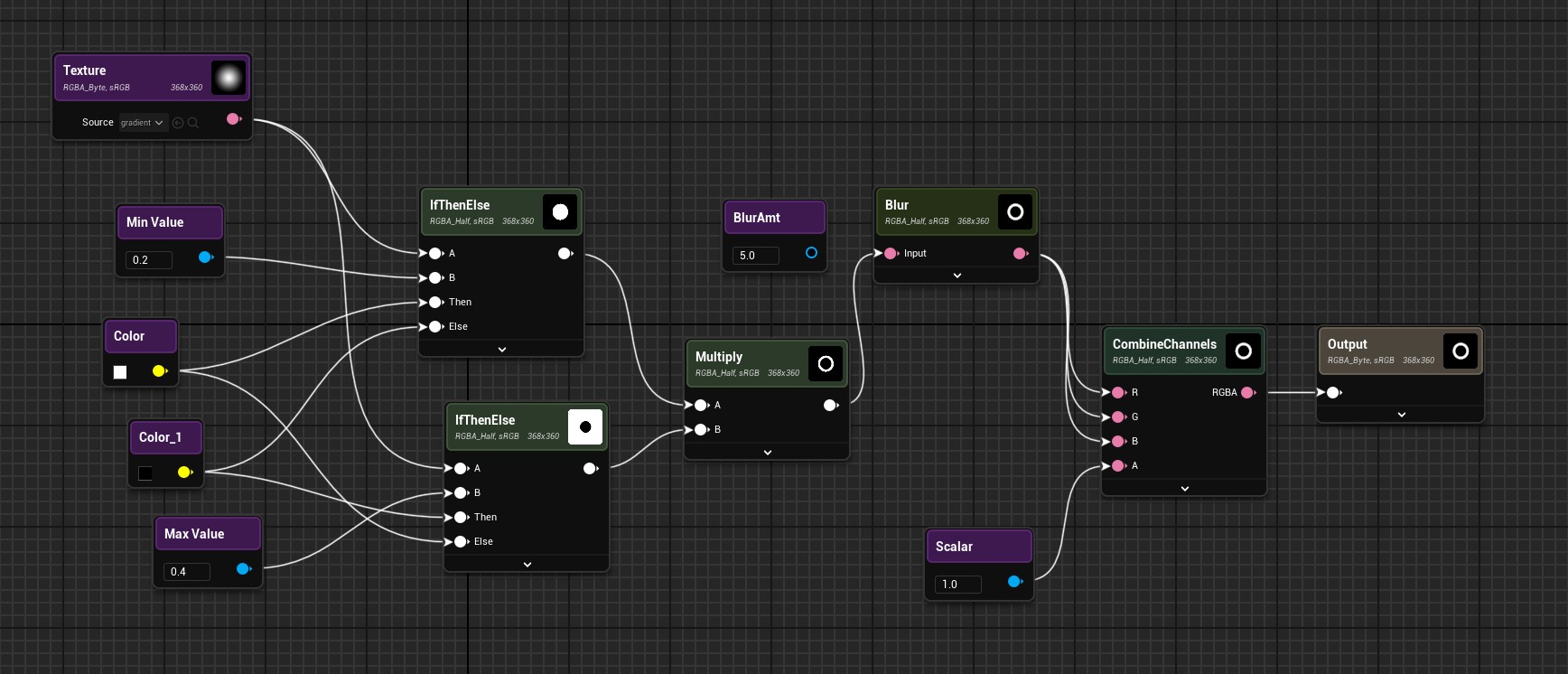
This utility creates gradient-based masks to isolate specific value ranges from input textures. It generates smooth transitions between terrain layers. The blur and multiply nodes refine mask edges, ensuring natural blending where different landscape materials meet.
Reflections & Growth
What I learned
This project deepened my understanding of the complete terrain pipeline — from procedural generation in Gaea to material optimization in Unreal Engine. I developed utilities for mask generation and channel remapping, which taught me how to build reusable technical art tools that improve workflow.
Alignment with my goals as a technical artist
This project demonstrates my ability to bridge artistic vision with technical implementation. Moving forward, I want to explore more procedural generation systems and real-time optimization techniques to create expansive, high-fidelity environments efficiently.