Featured At:UT & SXSW's VR Future of Technology Event ·
UT SDCT Elevate Showcase — Spring 2025
A virtual reality installation that translates the invisible weight of post-traumatic stress disorder into a shared, embodied experience. The headset becomes a conduit between lived experience and understanding—using technology not to separate, but to connect people across invisible psychological boundaries.
RoleExperience Designer, Programmer, Researcher
TimelineFall 2024
CollaboratorElla Key (Art Lead)
ToolsUnity, C#, XR Interaction Toolkit
VR Experience DesignImmersive StorytellingEmpathy Through TechnologyMental Health Awareness
Experience Trailer
Vision
While many VR works use immersion for spectacle or escapism, Put Your Dishes Away uses it for empathy. Rooted in my own lived experience with PTSD and informed by interviews with others who live with the condition, this work reframes seemingly ordinary moments of life into an emotional and sensory portrait of what it means to live with trauma.
Through interactivity and sensory distortion, the piece allows those without PTSD—especially friends and family—to feel, even momentarily, the confusion, fear, and detachment that can accompany everyday triggers. In a festival context, it invites reflection on how technology can be used not just to simulate the world, but to translate inner experience, turning empathy itself into an immersive, shared act.
The Experience
Beginning in the Mundane
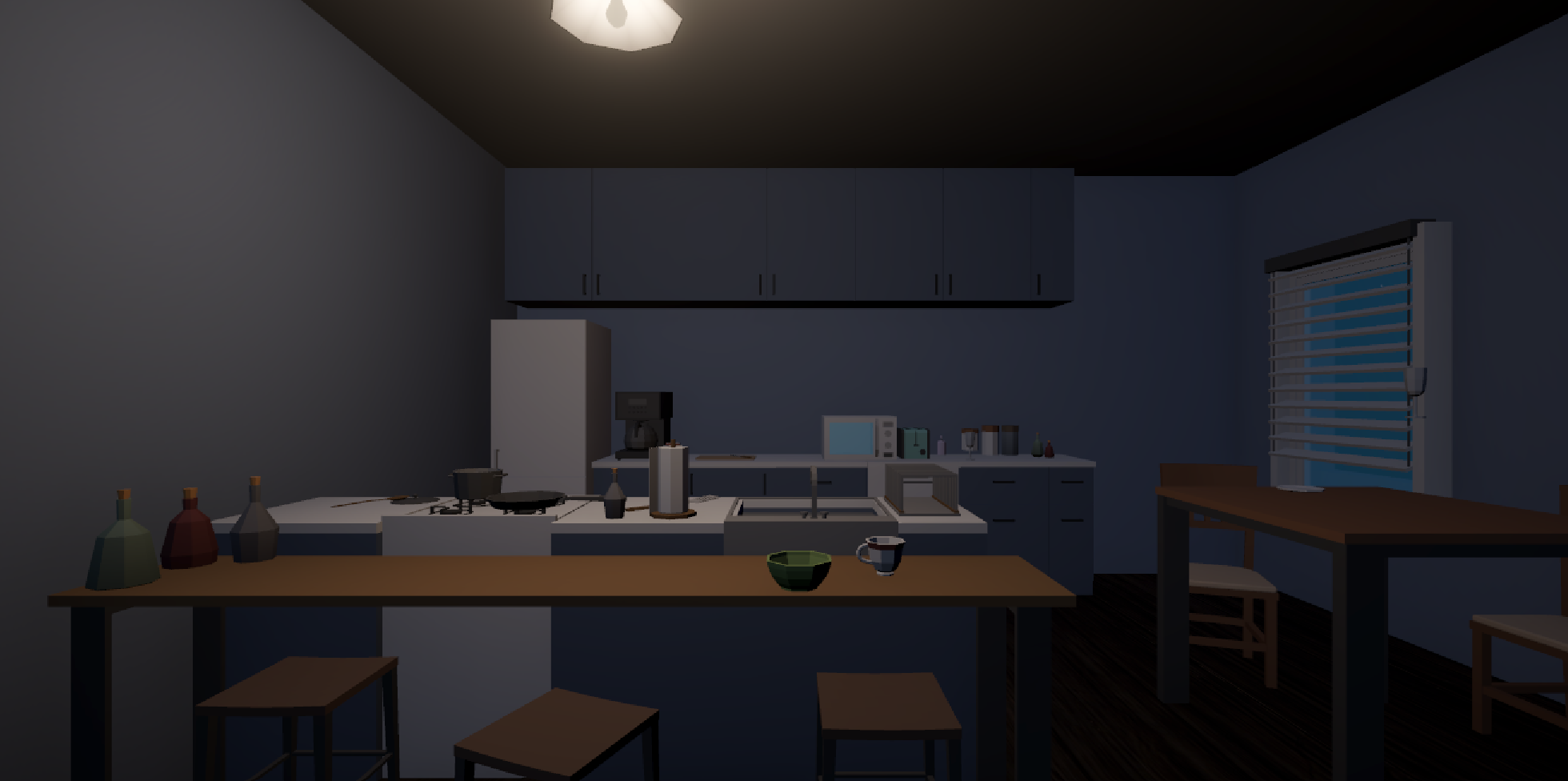
Users begin in a small, grayscale apartment and are asked to complete simple household tasks—putting away food, doing laundry, getting ready for bed. These actions, mundane to most, become moments of anxiety and disorientation as sounds, lights, and textures begin to warp the environment.
Dissolving Into Trauma
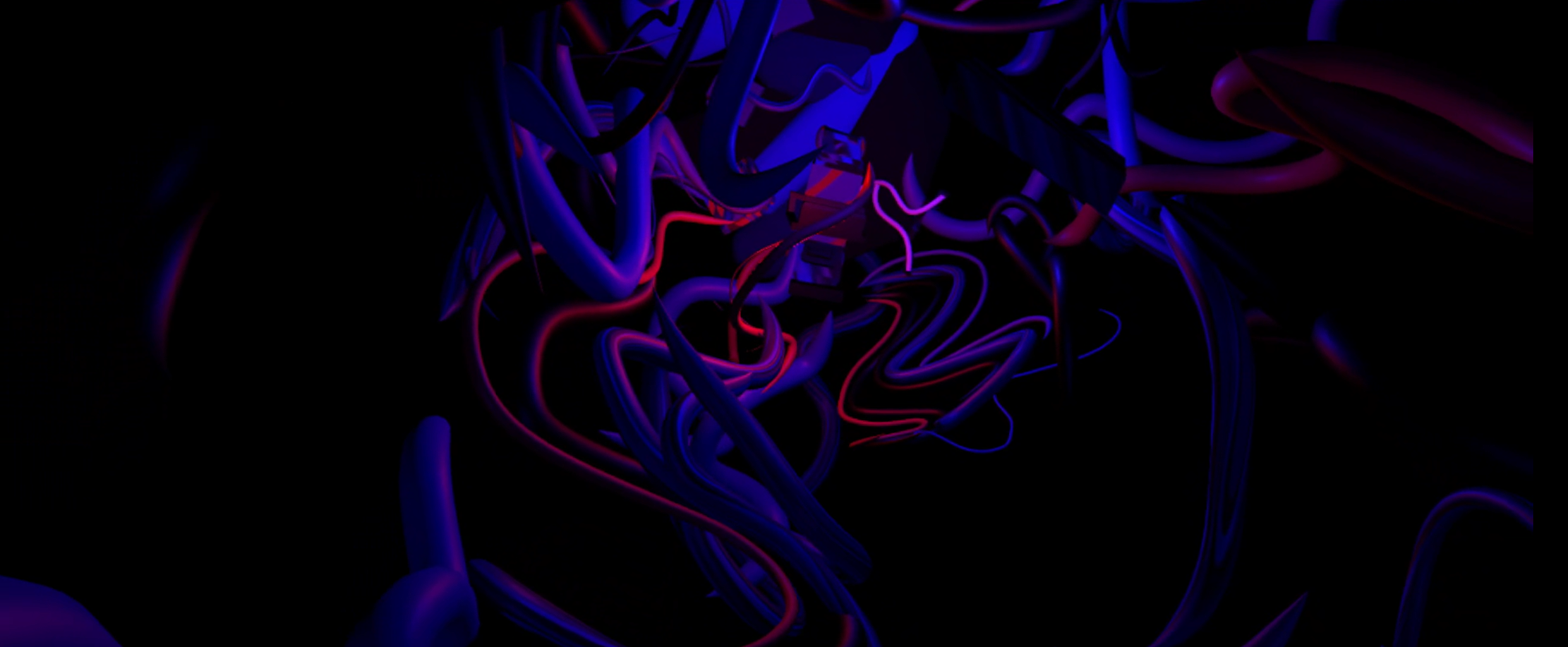
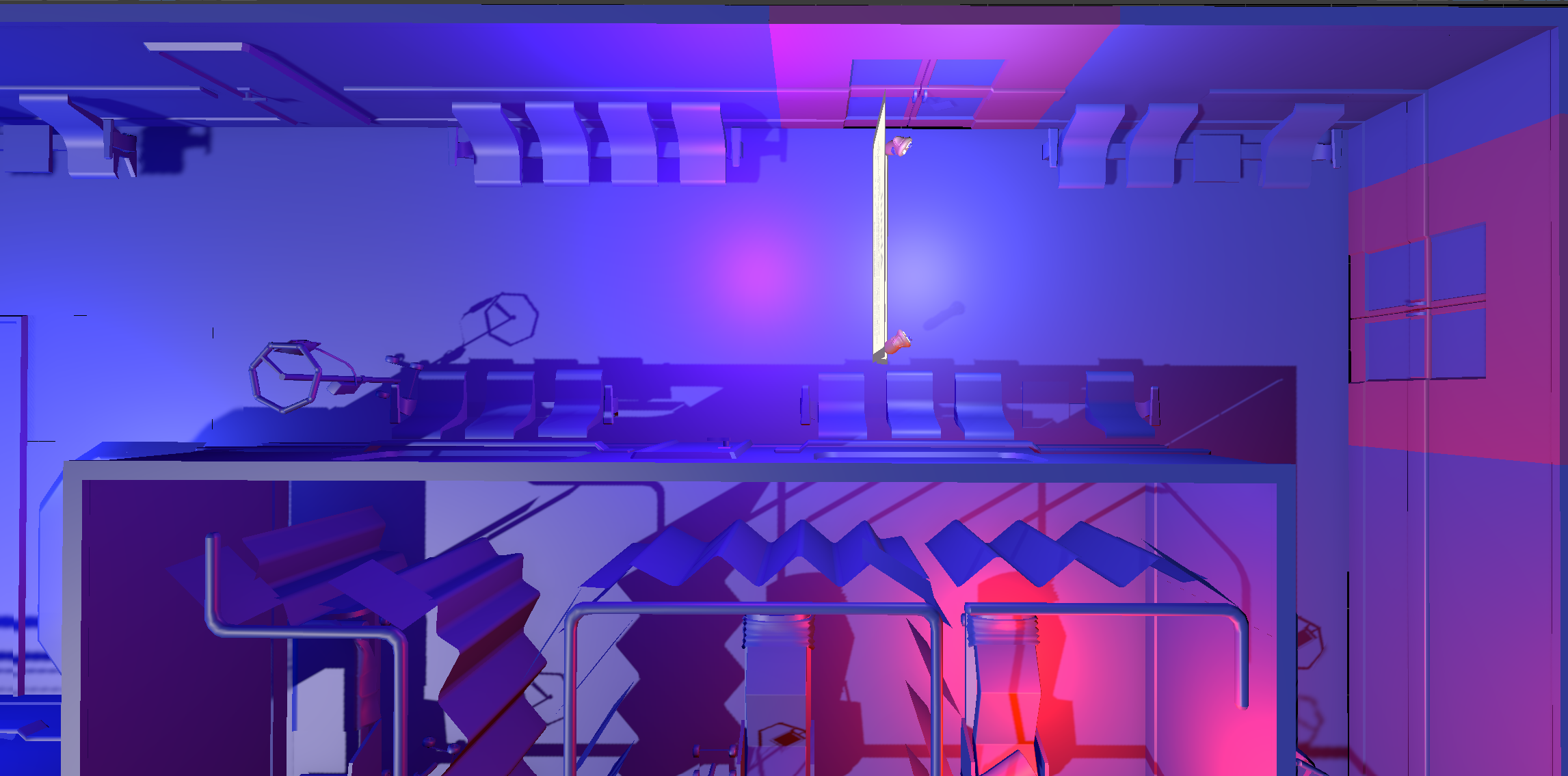
Gradually, the quiet apartment dissolves into an abstract, hospital-like world that mirrors the intrusive, depersonalizing sensations of PTSD. Strange objects seep through walls and floors—later revealed to be personified hospital equipment—as triggers become more immersive until you are floating out of your body in a world shaped by trauma.
Research & Foundation
User Research
The experience is grounded in real stories. I drew from my own experience with medical-related PTSD, then conducted interviews with others who live with the condition to identify which symptoms and triggers to highlight. We also interviewed people who knew someone with PTSD to understand what they wanted to learn—and what they found difficult to grasp about their loved ones' experiences.
From PTSD Interviews
Loss of agency · Depersonalization/derealization · Hypervigilance · Depression & anxiety · Loneliness · Flashbacks
From Family/Friends
Wished they knew what PTSD felt like · Found it difficult to understand what their loved one was going through · Wanted to help but weren't sure how
Concept Research
I researched the dissociative subtype of PTSD—characterized by depersonalization (feeling detached from oneself) and derealization (experiencing the external world as unreal). This became the experiential core of the project. Rather than depicting flashbacks literally, we focused on translating that sense of reality slipping away.
Experience Design Decisions
Simulating Loss of Agency
When triggers occur, I designed the system to remove player movement entirely—forcing users to watch helplessly as their environment transforms. This represents the depersonalization many people with PTSD experience: being present but unable to act, watching yourself from outside your body.
Building Triggers Through Mundane Tasks
The to-do list UI was designed to simulate depression—making mundane tasks feel like more work than they actually are. During triggers, the clean UI transforms: fonts become erratic, task descriptions become confused and anxious, visually representing the mental state shift.
During triggers, hospital imagery seeps into the domestic space—representing how trauma can invade ordinary moments
Sound as Emotional Architecture
I carefully arranged over 15 sound effects to build the emotional arc: fluorescent light hum, heartbeats, distant hospital ambience, crying. Sounds trigger at specific moments to advance the experience and layer with visual distortions to create a multi-sensory representation of trigger states.
User Testing & Iteration
We conducted usability tests with people both familiar and unfamiliar with PTSD to ensure the experience was educational, emotionally impactful, and respectful. Key iterations included:
Sound Design
Testers wanted more environmental audio. We added a full soundscape and carefully timed effects to specific trigger moments.
Affordance & Clarity
Made tasks clearer while keeping the deliberate confusion of the "scared" UI state. Positioned UI to follow users without being intrusive.
Object Interaction
Added physics (gravity, colliders) and sound feedback to make interactions feel grounded before the world starts breaking.
Movement
Shifted toward teleportation over smooth locomotion to reduce motion sickness and increase accessibility.
Technical Implementation
Built with Unity's XR Interaction Toolkit for Oculus Quest. I created an event-driven system using UnityEvents to trigger narrative and environmental changes based on user interactions—coordinating audio cues, visual effects, lighting shifts, and environment transformations. The experience maintains VR persistence across multiple scenes (home space and various trigger states) using both world-space UI and physical interactions.
Key technical challenges included optimizing for Quest hardware while maintaining visual fidelity (solved through baked lighting and efficient asset loading), and creating smooth transitions between reality states that felt psychologically accurate rather than simply "spooky."
My Contributions
Helena Bjeletich — Experience Design & Technical Lead
Research & interviews · Experience flow design · Concept art · 3D modeling (Gravity Sketch, Blender) · Texturing · Environment assembly
Reflection
This project taught me that the most powerful use of VR might not be transportation to other worlds, but translation of experiences that exist in our own. The technology's immersive qualities—embodiment, presence, spatial audio—become tools for empathy when applied thoughtfully. Watching someone remove the headset and say "I didn't know it felt like that" made every design decision worthwhile.