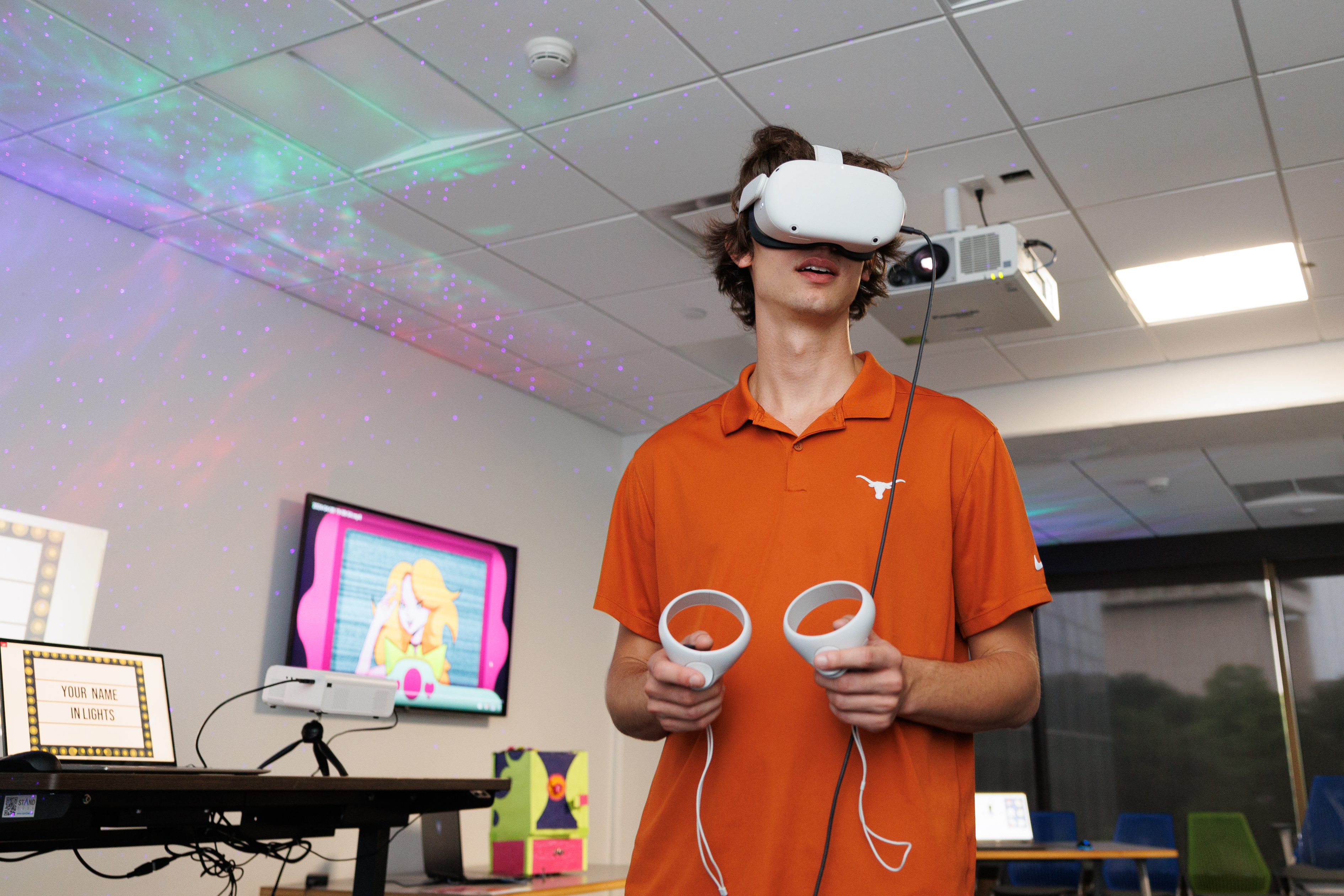
Featured At:Currents New Media Festival — June 2025 ·
UT & SXSW's VR Future of Technology Event ·
UT SDCT Inside Out Showcase — Spring 2025
In the 2021-2022 school year alone, over 2,000 book bans were enacted across U.S. public schools. This VR experience transforms that statistic into something you can walk through, touch, and feel—a library where forbidden books thrive, defying censorship and finding new life amongst controversy.
A number like "2,000 banned books" is easy to scroll past. But what does it feel like to stand in a room surrounded by them? To pick one up and realize it was banned from a school library just miles from where you live? The Banned Book Library transforms abstract data into embodied experience—making the scale of censorship tangible and personal.
This project sits at the intersection of data visualization, social commentary, and immersive design. Rather than presenting information passively, it invites users to physically engage with the reality of book banning in America, fostering awareness through presence and interaction.
The Experience
Discovering the Collection
Users enter a virtual library filled with books—each one representing a real title banned from U.S. schools. They can freely explore the space, pick up any book that catches their eye, and discover information about where and when it was banned.
The library isn't organized by author or genre, but by the geography of censorship, allowing users to discover patterns and proximity to their own communities. The interaction is intentionally simple: walk, reach, grab, read. This accessibility ensures that the focus remains on the content and its implications rather than on mastering complex VR mechanics.
Data & Research
The experience is built on real data from the PEN America Index of School Book Bans, a comprehensive database tracking censorship in American schools. Each book in the virtual library corresponds to an actual banned title, with accurate metadata about its ban location.
A note on the data: School districts are not required to report why books are banned—only that they are. This absence is itself revealing, and the experience reflects this gap: users can see what was banned and where, but the "why" remains conspicuously missing, inviting them to draw their own conclusions.
Design Decisions
Procedural Generation from Real Data
Rather than manually placing 2,000+ books, I built a system that procedurally generates the library from the PEN America dataset. Each book exists as a ScriptableObject created automatically via a custom editor script that parses the CSV data. This approach means the library can grow as new bans are documented—the experience stays current with the ongoing reality of censorship.
Interaction Design
When users pick up a book, a UI panel appears with information about the title, author, and ban location. I designed this to feel like discovering a card in a library catalog—familiar, archival, slightly formal. The interaction creates a moment of pause and reflection rather than rapid consumption of information.
Environmental Design
The library aesthetic is intentionally warm and inviting—wood, soft lighting, the feeling of a space where books are cherished. This creates cognitive dissonance with the subject matter: these books are banned, yet here they're given a home. The environment argues, without words, that these books deserve to exist.
Technical Implementation
Building for Scale
Built with Unity's XR Interaction Toolkit for Oculus Quest. The core technical challenge was creating a scalable system that could handle thousands of unique book objects while maintaining VR performance standards.
Data Pipeline
Custom editor script parses PEN America CSV data and auto-generates ScriptableObjects for each book, enabling easy updates as new bans are documented.
Performance
Baked lighting, efficient asset loading, and LOD systems ensure smooth performance on Quest hardware despite the large number of interactive objects.
VR Interaction
Locomotion system with both teleportation and smooth movement, distance grab for accessibility, and dynamic UI that responds to book selection.
Modularity
Separate components for book interaction, data management, and VR controls allow the library to expand without modifying core systems.
Reflection
From Showcase to Festival
Developing The Banned Book Library challenged me to think about VR not just as a medium for games or simulations, but as a tool for social awareness. Having this work shown at Currents New Media Festival was a reminder that art and technology can work together to start conversations about issues that matter.
The most meaningful moments came from watching users discover that a book they loved—or one they'd never heard of—had been banned somewhere in America. That moment of recognition, of personal connection to abstract data, is what immersive technology can uniquely provide.
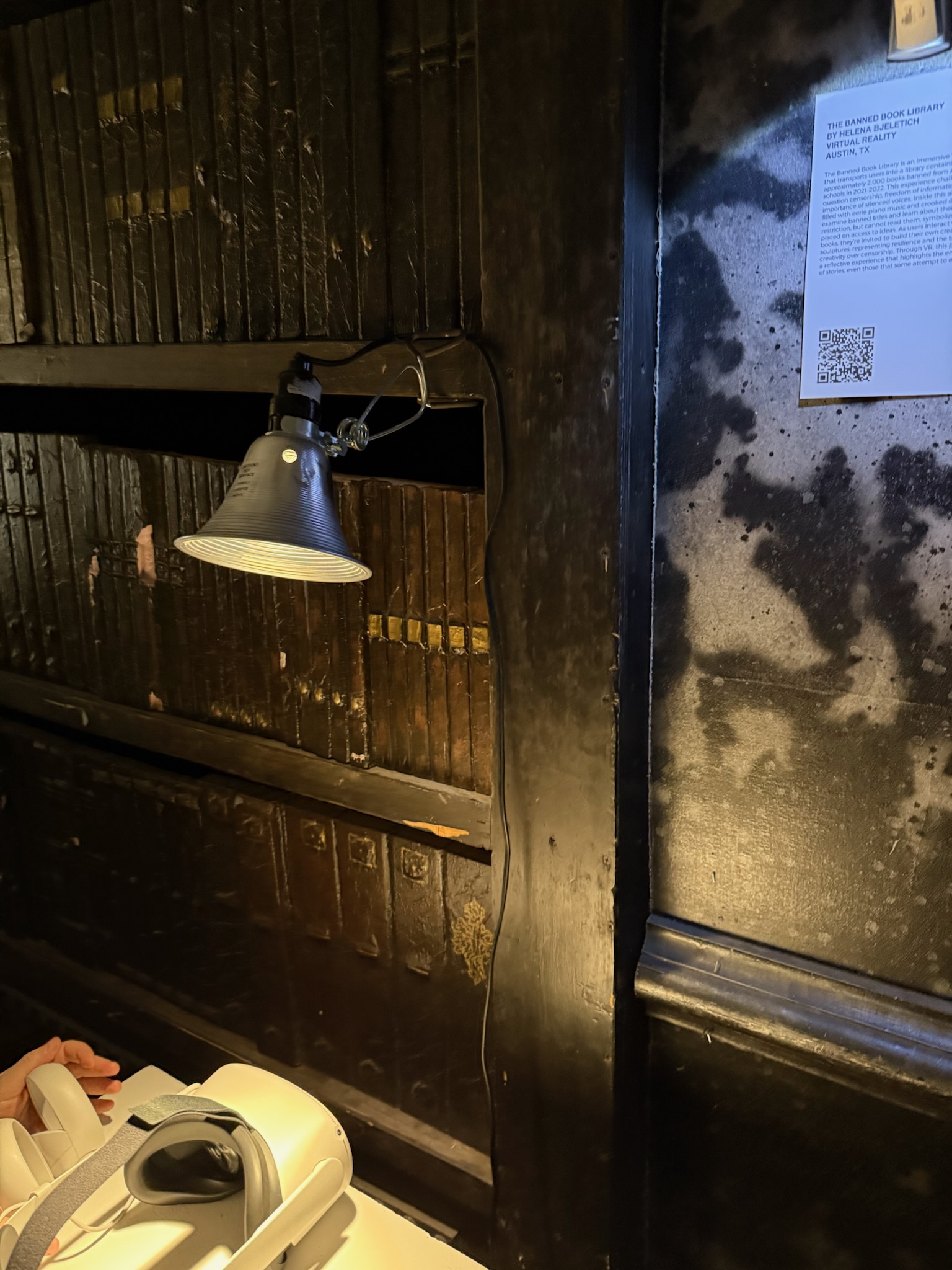
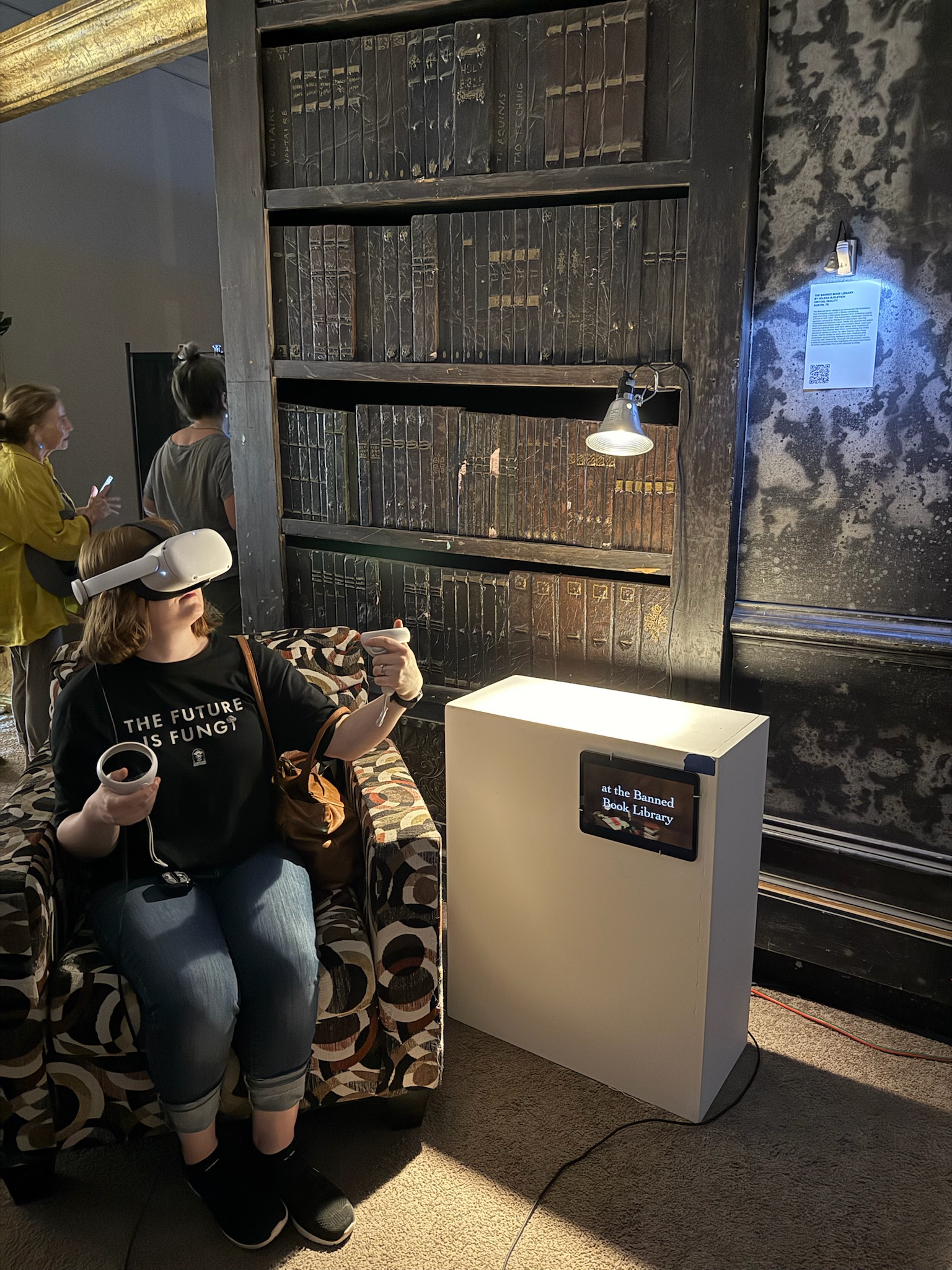
Installation at Currents New Media Festival, Santa Fe — June 2025